Set Up Fast. Reconfigure Anytime. Ship Light.
Modular Trade Show Booths for Every Show, Space and Schedule
Heavy-duty modular trade show booths for first-time exhibitors, growing marketing teams, multi-show exhibit programs, and companies weighing rental against purchase. One reusable frame system takes you from a 10 x 10 inline to a 20 x 20 island, with new graphics instead of a new booth.
How modular booths work
One kit of parts, many booth shapes
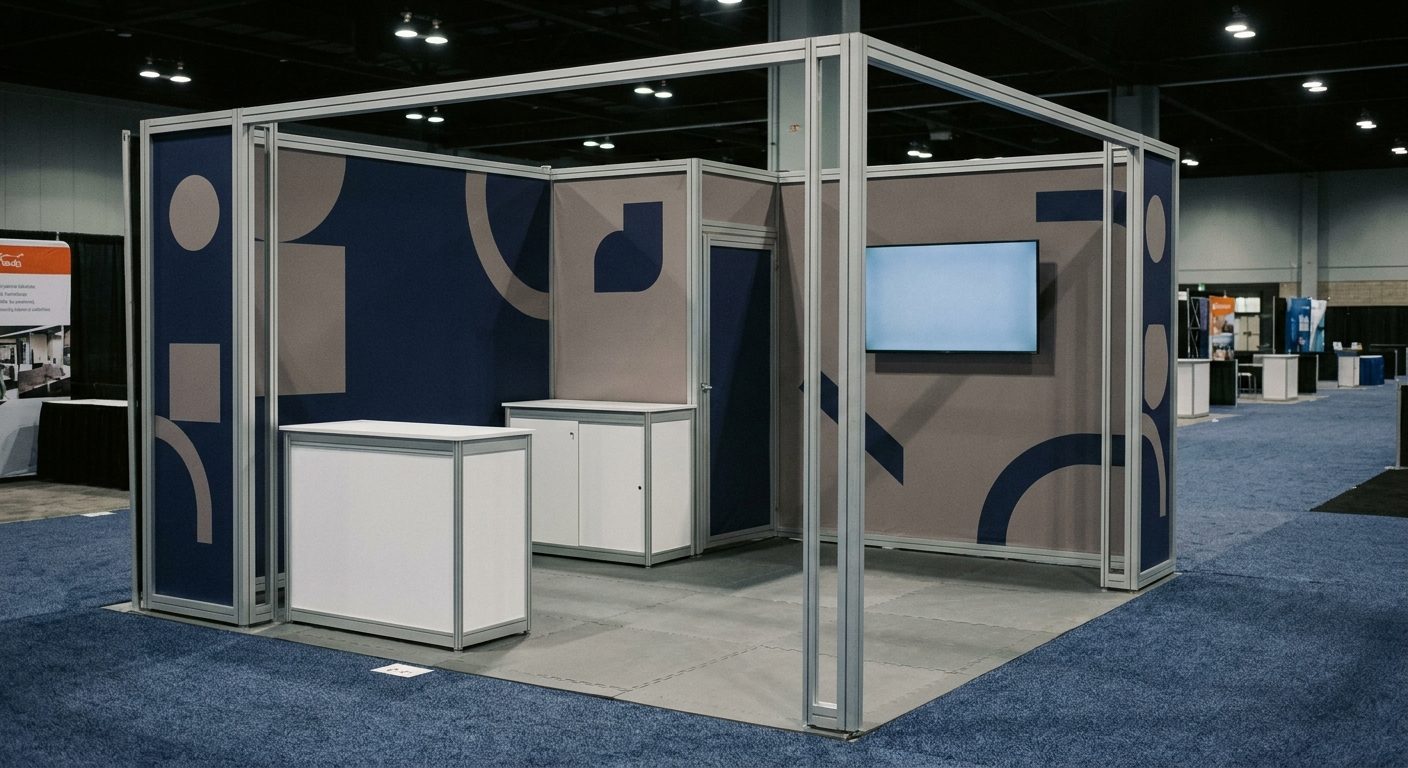
A modular trade show booth is built from standard, reusable parts rather than custom-built walls. A frame of aluminum extrusions sets the shape, printed fabric or panels carry the graphics, and counters, monitors, lights and storage attach to the frame.
Because the parts are standard, the same kit can be rearranged for a different booth size or floor plan, and the look can change with a new set of graphics. That is the main difference from a traditional custom exhibit, which is built for one shape and is heavier to ship and store.
Layer 1
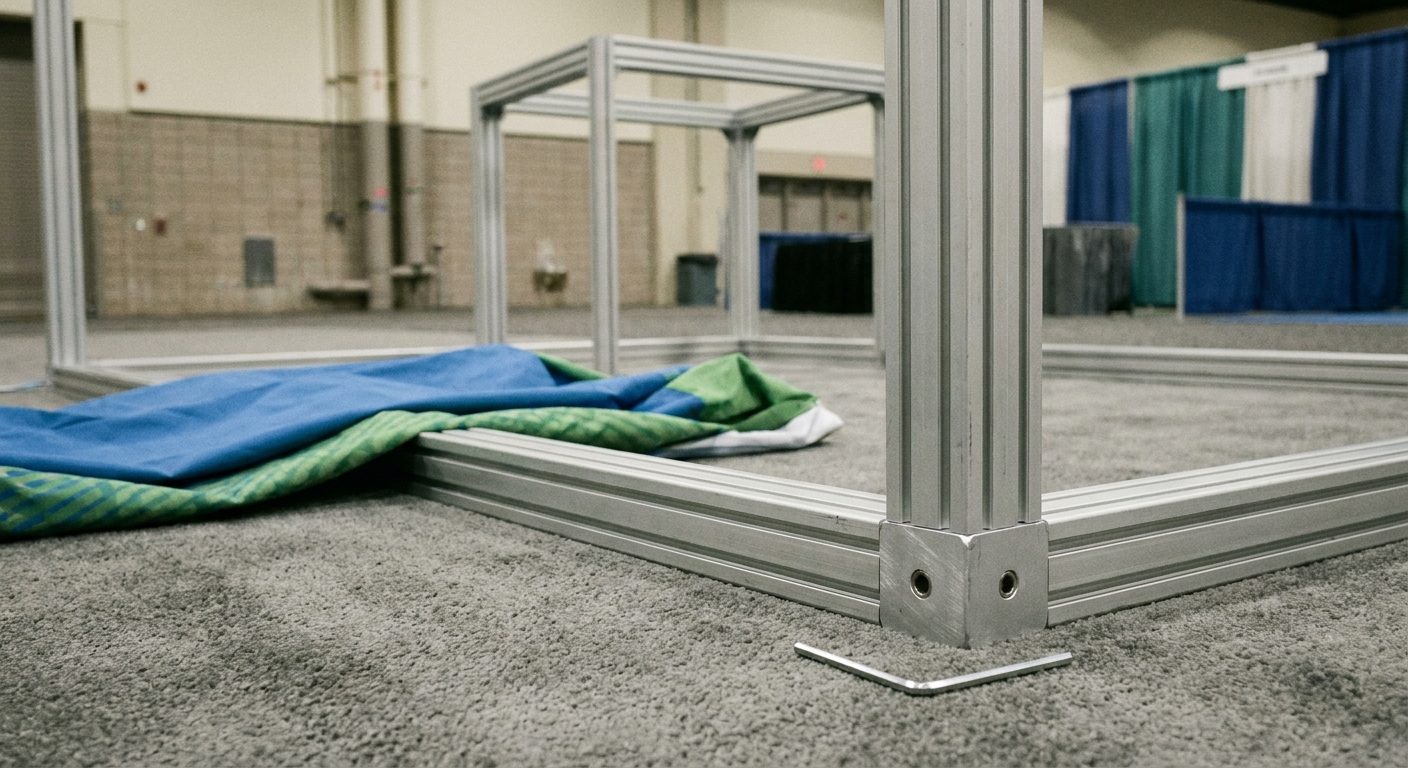
The frame
Lightweight aluminum extrusions, cut to length and joined with connectors. The frame sets the shape of the booth and carries the graphics, shelves, counters and monitors.
Layer 2
The graphics
Printed fabric stretched over the frame, or rigid panels set into it. Graphics carry the brand and the message, and they are the part most often replaced between shows.
Layer 3
The fixtures
Counters, kiosks, monitor mounts, shelving, lighting and storage that clip or bolt to the frame. They turn a wall into a working booth.
Aluminum extrusion frames
Slotted aluminum profiles that lock together with cam or bolt connectors. Strong, light and reusable, they are the backbone of most modular booths.
Tension fabric graphics
Dye-sublimated fabric with a silicone edge that presses into a channel in the frame, or a pillowcase graphic that slides over it. Wrinkle-free, washable and light to ship.
Panel systems
Rigid panels in laminate, acrylic or printed board set into the frame. Used where a booth needs a hard surface for shelving, product display or a more architectural look.
Hybrid builds
Modular frames combined with a few custom-built pieces such as a counter, a tower or a hanging structure. A common path for exhibitors who want a custom feel on a reusable system.
Sizes and layouts
Inline, corner, peninsula and island
Booth space is sold in footprints, commonly in 10-foot increments in the US, and its position on the floor decides how many sides are open to the aisle. That, more than the square footage alone, shapes what a modular booth needs to do.
Inline booths: 10 x 10 and 10 x 20
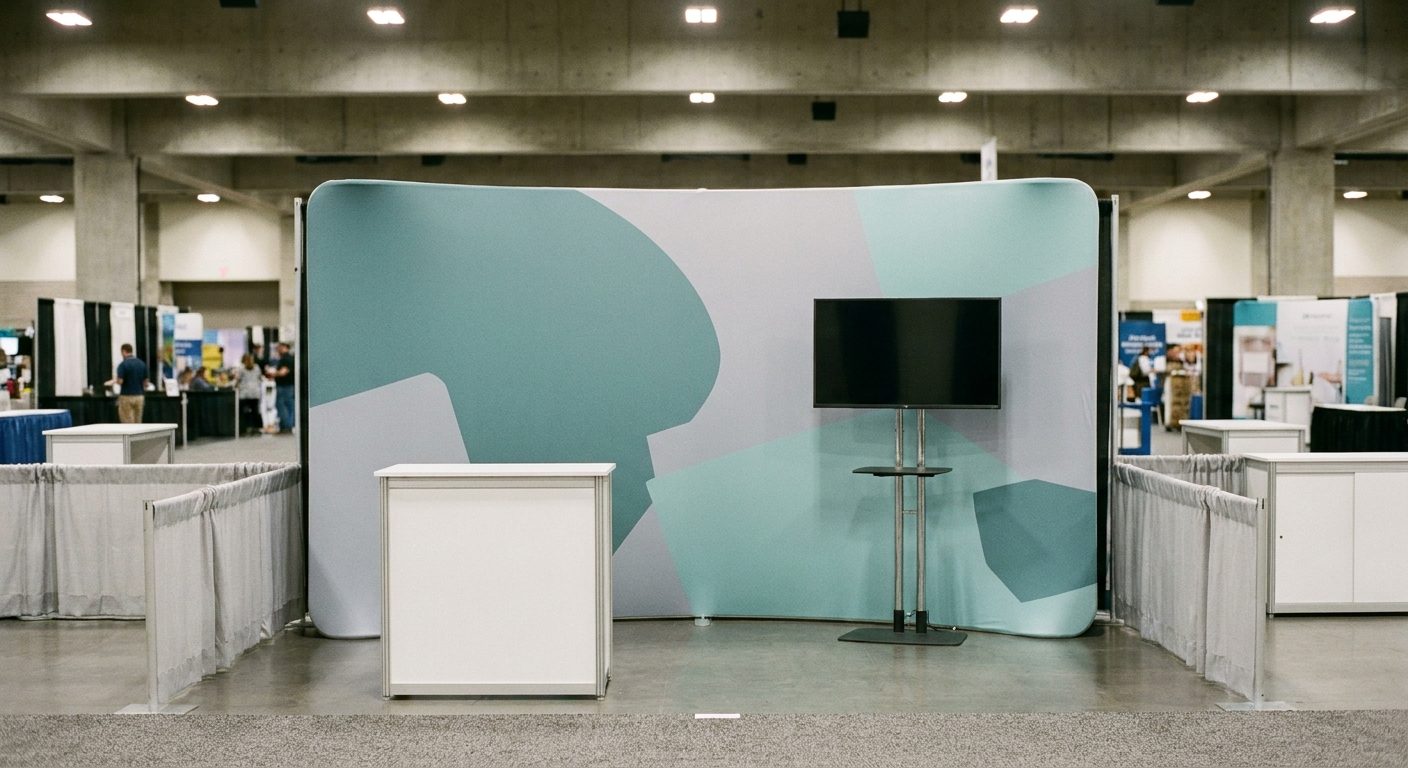
Inline booths sit in a row along an aisle with neighbors on both sides, so the backwall does most of the work. Most first-time exhibitors start here, and a good inline kit is often the first piece of a modular system that grows later.
- One open side, facing the aisle, with neighbors on the left and right.
- Show rules commonly cap the backwall height, often at about 8 feet, and limit how high fixtures can be toward the aisle.
- A 10 x 20 kit can usually split into two 10 x 10 setups for smaller shows.
Peninsula and island booths
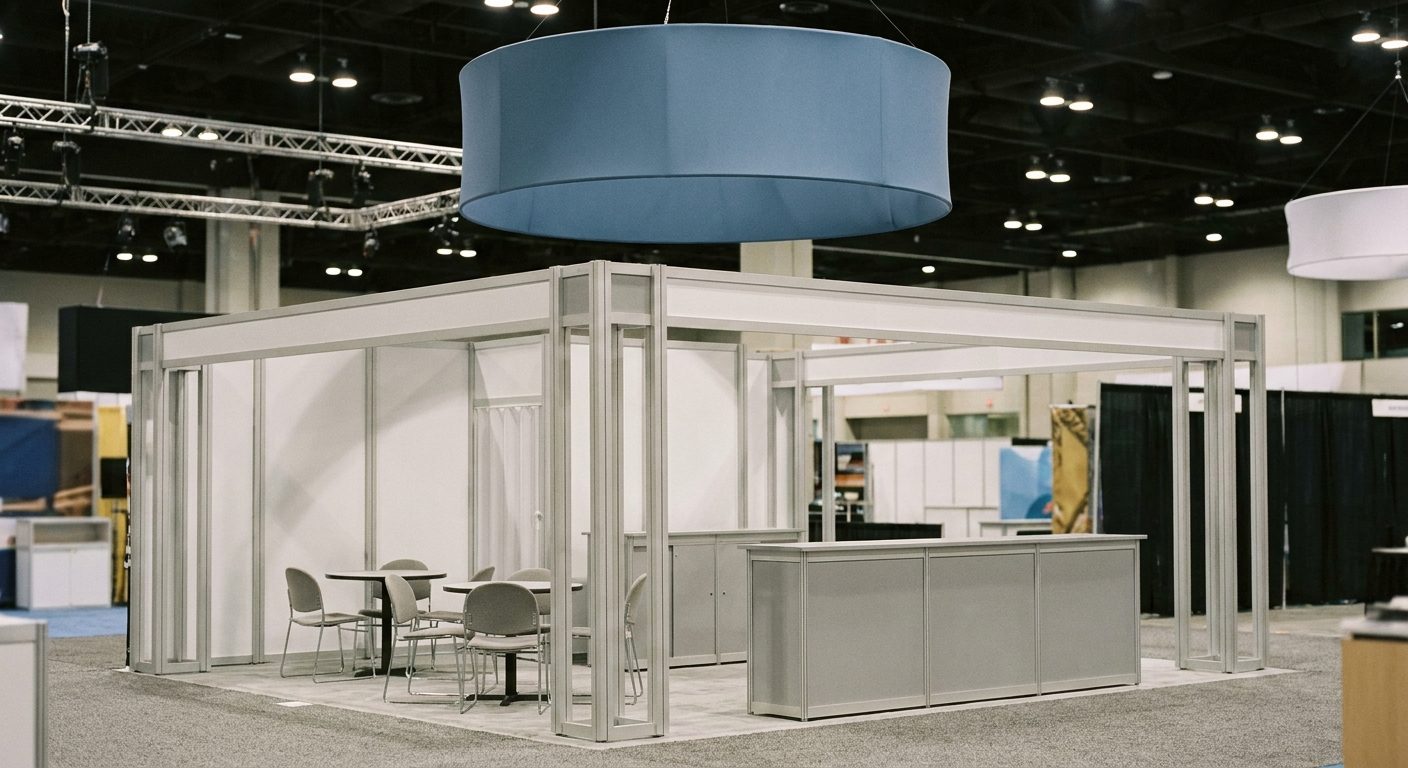
Peninsula booths face aisles on three sides, and island booths on all four. With more open sides, the structure moves from a backwall to towers, meeting areas, demo stations and, where the venue allows, hanging signs.
- Island booths are often 20 x 20 feet and larger, and can usually go taller than inline space.
- Height limits, hanging-sign rules and see-through requirements vary by show and venue.
- Modular towers and walls can be rearranged as the floor plan changes from show to show.
Corner booths
An inline booth at the end of a row, open on two sides. It gets extra aisle exposure, and a modular kit can turn one sidewall into a second display face.
Tabletop and counter displays
Small frame-and-fabric displays for tabletop spaces, job fairs and regional events. Many share connectors and graphics formats with full booths.
Rental and pop-up modules
Standard rental kits that a builder sets up for a single show, branded with your own fabric graphics. Useful for testing a new show or a booth size before buying.
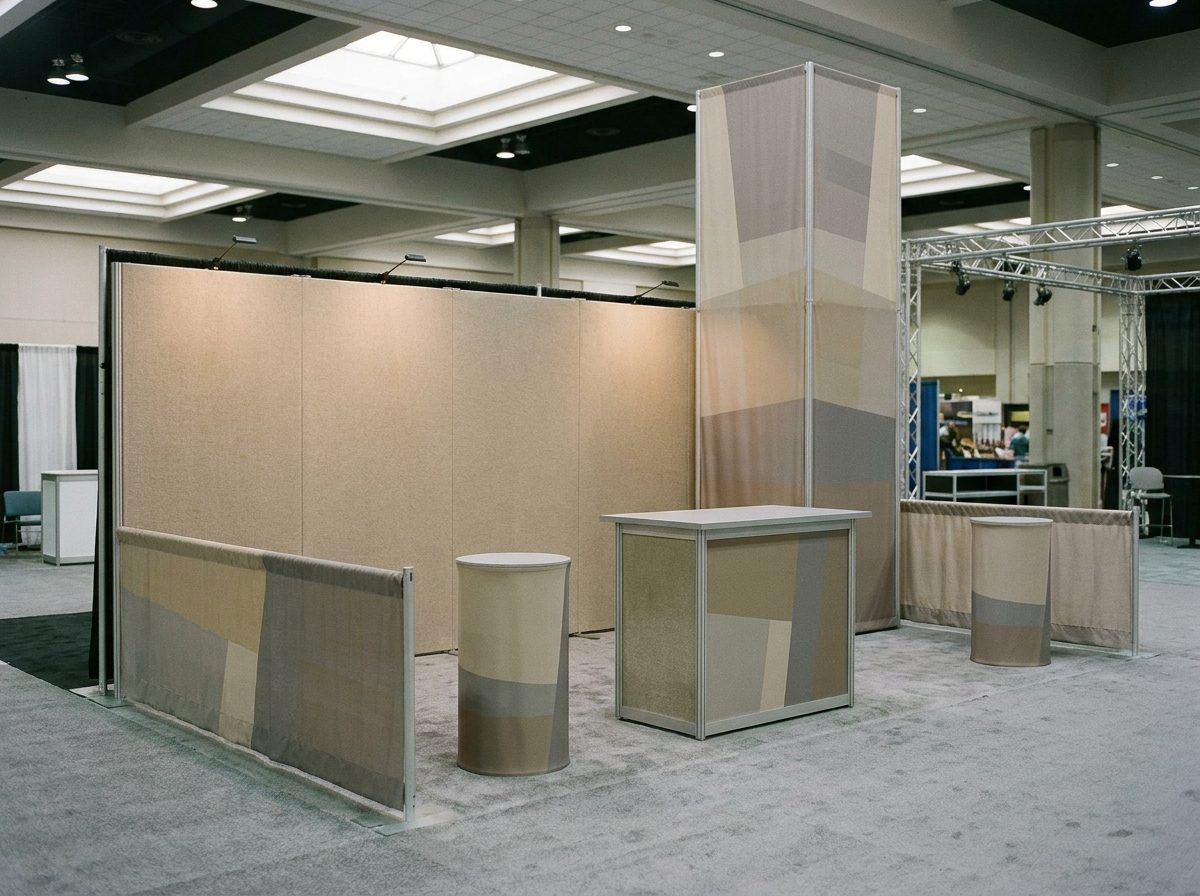
Reconfiguring across shows
A well-planned modular kit is designed for the range of spaces you book, not one show. A 10 x 20 inline backwall can become the rear wall of a peninsula, two sidewalls can stand alone as 10 x 10 setups, and island towers can be pulled out for a smaller event. Plan the graphics in panels that still read correctly when the walls are rearranged.
Rent, buy or hybrid
Three ways to get a modular booth on the floor
The right choice depends on how many shows you do, whether your booth size changes, and where the booth will live between events.
Rent
The builder supplies a standard modular structure for a single show, with your graphics printed for it. You avoid storage and maintenance and can change the booth size every time.
Best when you exhibit a few times a year, are testing new shows, or need a different size at each event.
Buy
You own the frame, graphics and fixtures and use them across many shows. The structure is a one-time purchase that can be refreshed with new graphics.
Best when you exhibit often at the same booth size and want a consistent look across your show schedule.
Hybrid
You own the parts you use every time, such as graphics, counters and a signature tower, and rent the frame or the larger structure for bigger shows.
Best when your schedule mixes small and large shows, or when storage space is limited.
Components
What goes into a modular booth
The frame and graphics make the walls. The components below make the booth work for the people staffing it and the visitors walking in.
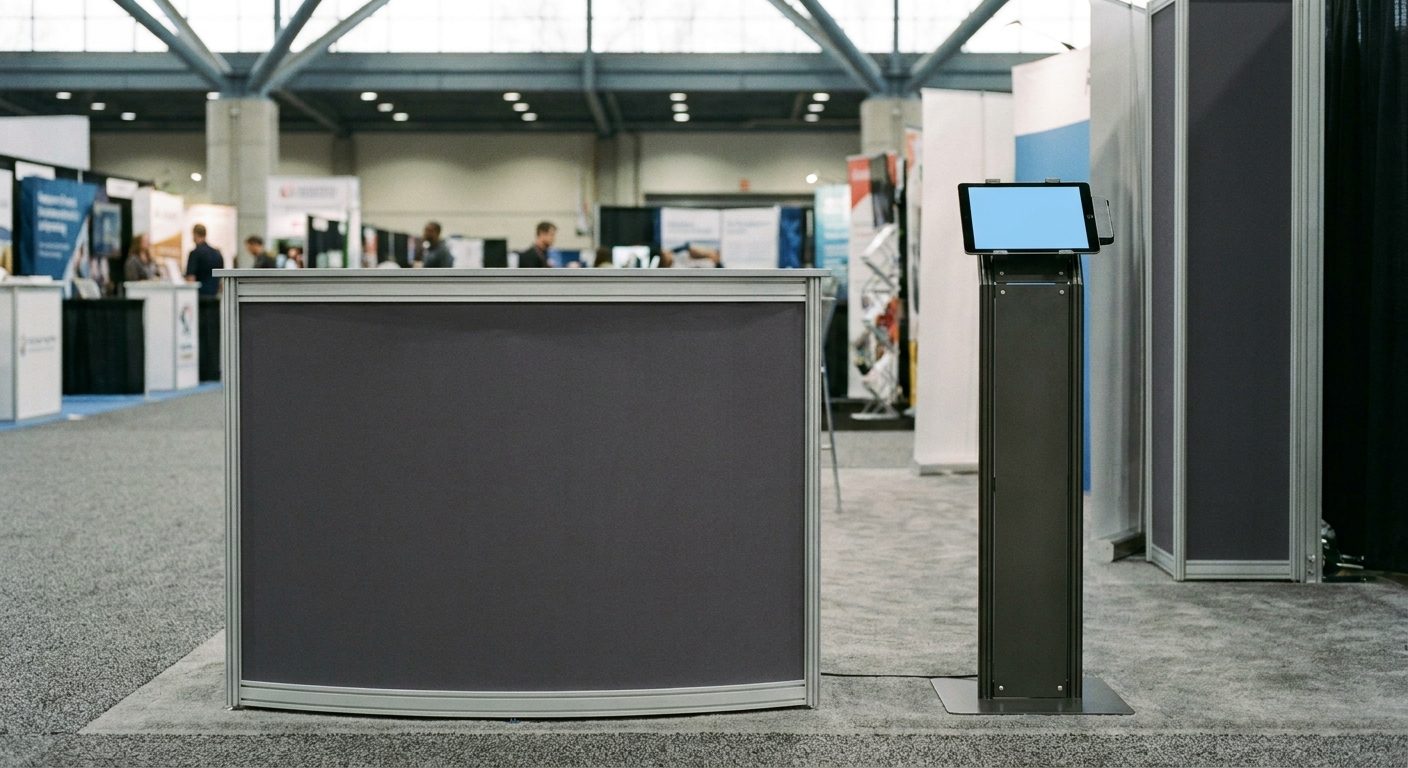
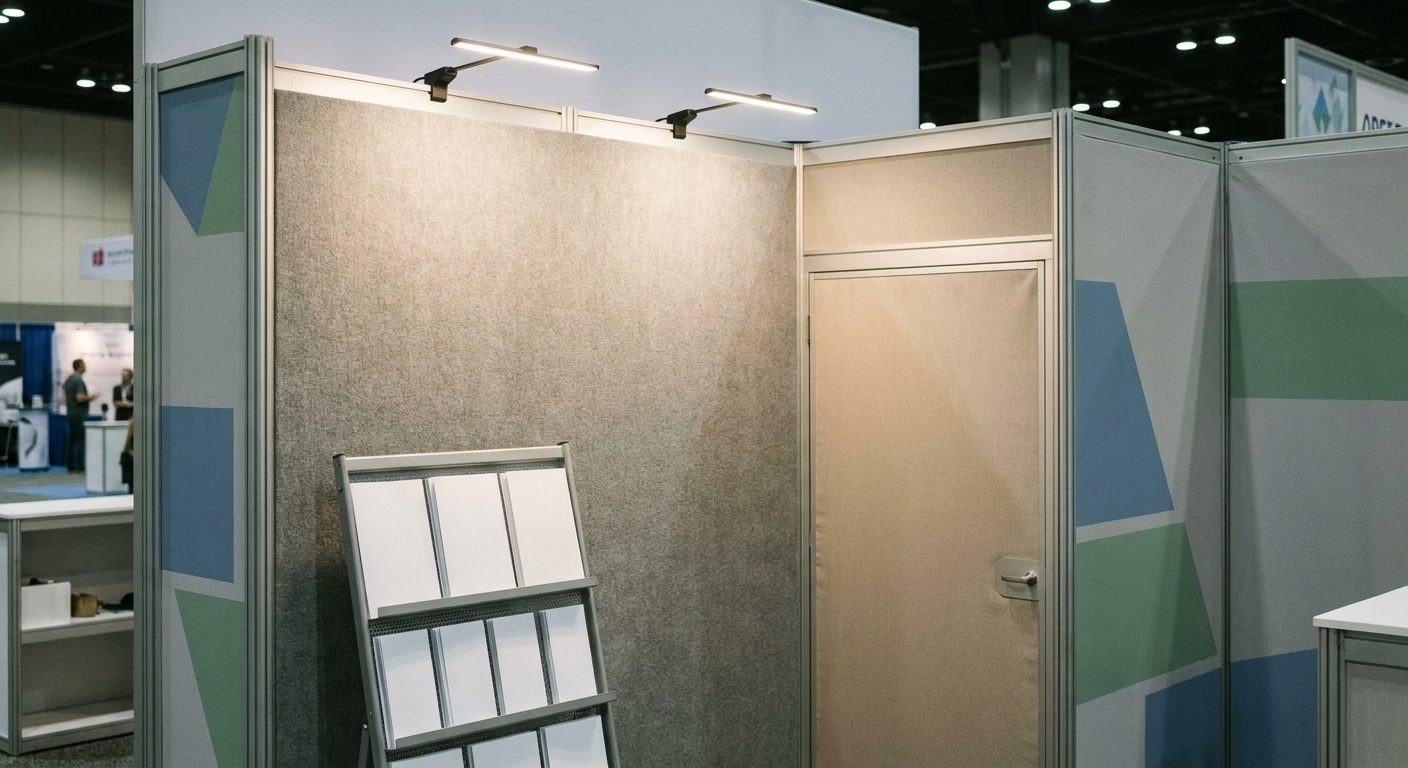
Backwalls
Straight, curved or angled fabric walls that carry the main graphic. On inline booths, the backwall is most of the booth.
Counters and kiosks
Reception counters, demo counters and slim kiosks, often with lockable storage. Some shipping cases convert into counters with a graphic wrap.
Monitor mounts
Brackets and frame-mounted arms for screens of different sizes, with cable management inside the extrusion.
Lighting
LED arm lights, edge lights and backlit fabric walls. Lighting makes graphics readable in dim halls and draws attention from down the aisle.
Flooring
Padded carpet, interlocking tiles or raised flooring. Comfort for staff on long show days, and a defined edge for the booth.
Storage closets
Small closets built into the backwall for coats, bags, stock and literature, so the booth floor stays clear.
Shelving and product display
Shelves, pedestals and slatwall panels that attach to the frame to put product in front of visitors.
Hanging signs
Fabric structures suspended above island and some peninsula booths, where the venue allows rigging. They help visitors find the booth from across the hall.
Shipping, setup and graphics
Getting the booth to the show and back
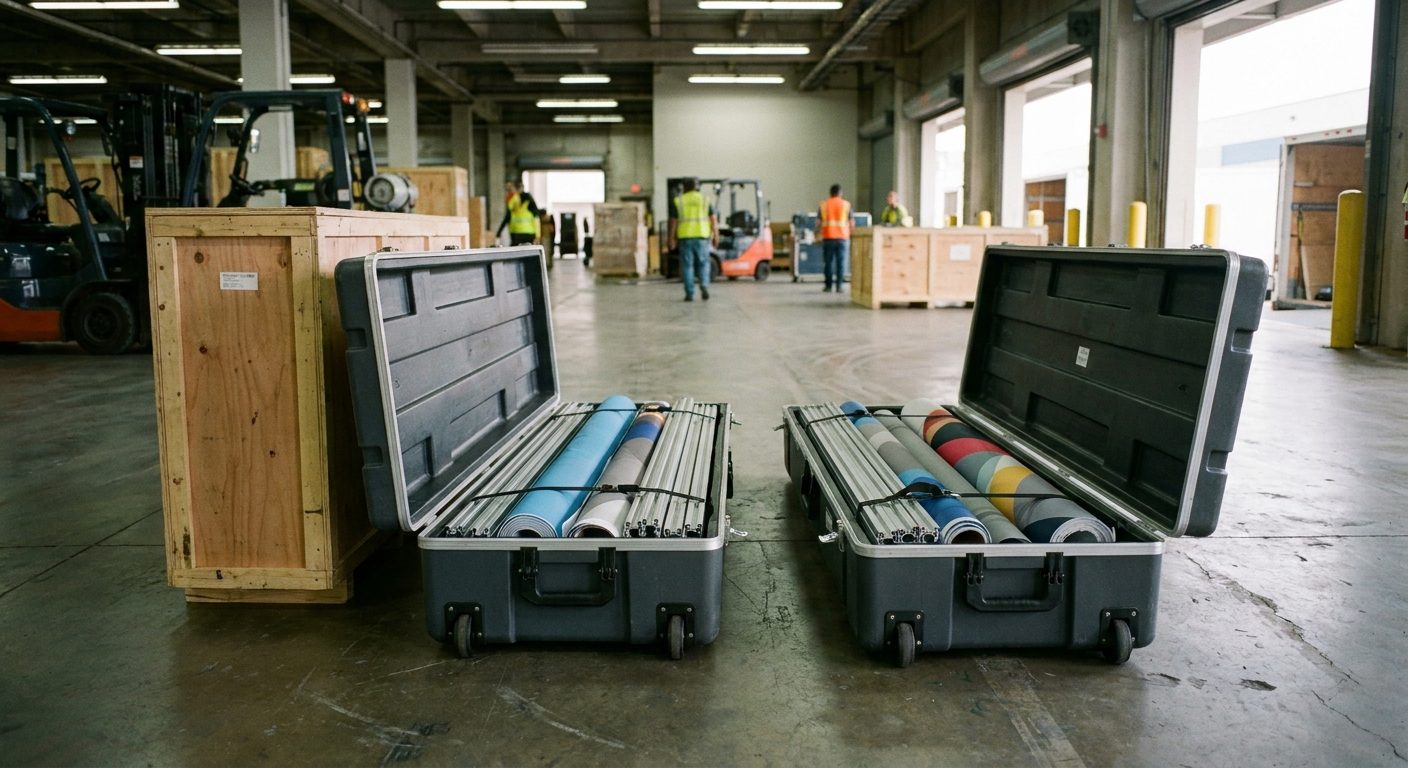
Shipping cases
Modular booths pack into wheeled molded cases or crates sized for the frame and rolled graphics. Smaller kits can often ship by ground freight or as checked items; larger booths ship on pallets or in crates.
Setup time and labor
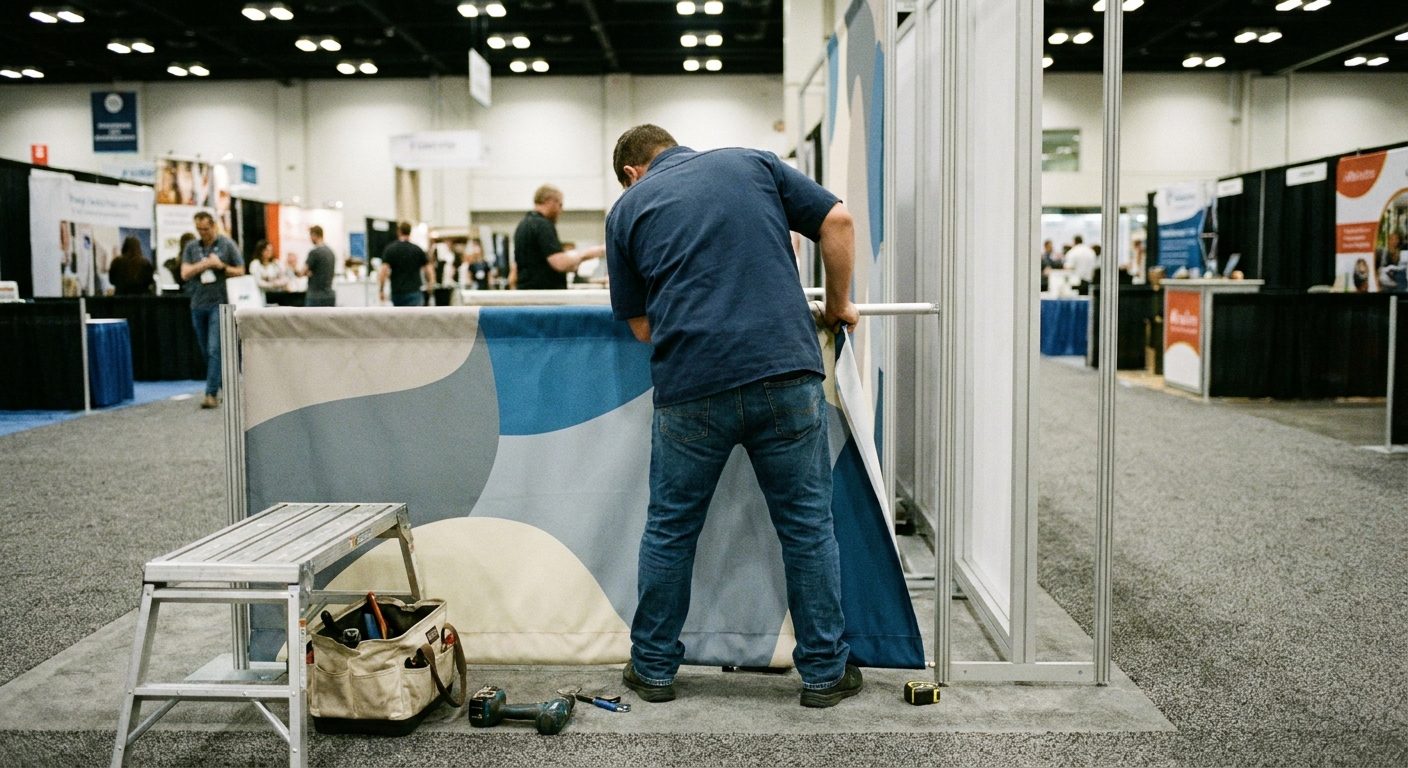
Many modular frames assemble with few or no tools, and a small booth can often go up in an hour or two. Some venues require contracted labor for installation, rigging or electrical work, so check the exhibitor manual before planning a do-it-yourself setup.
Graphics changes
Because fabric graphics are separate from the frame, a booth can carry a new message, product launch or rebrand by reprinting the fabric. Many exhibitors keep the frame for years and refresh graphics every season.
Storage between shows
An owned booth needs a home between shows: your own warehouse, the builder's storage program, or a third-party exhibit storage facility.
Budget drivers
What moves the cost of a modular booth
Two booths of the same size can differ widely in cost. These are the factors that make the difference, so you can compare quotes on the same basis.
| Factor | What it changes |
|---|---|
| Booth size and layout | The floor space you book and whether it is inline, peninsula or island set how much structure, graphics and furniture the booth needs. |
| Structure height and complexity | Taller walls, towers, curves, double-deck elements and hanging signs add frame, engineering and labor. |
| Graphics area | Fabric and panel graphics are priced largely by area. Large backlit walls and full wraps add up across a booth. |
| Technology and lighting | Monitors, video walls, touchscreens, power distribution and lighting add hardware, rental fees and electrical services at the show. |
| Rent, buy or hybrid | Renting spreads cost show by show; buying is an up-front investment that pays back across a schedule; hybrid sits between them. |
| Shipping and material handling | Freight to and from the show, plus the venue's material handling charges, which are often based on shipment weight. Lighter kits cost less to move. |
| Installation and dismantle | Contracted labor where the venue requires it, and the time it takes. Tool-light modular systems help keep this down. |
| Storage and refurbishment | Warehousing between shows, repairs, and replacing worn graphics, carpet and fixtures over the life of the booth. |
Choosing a builder
Questions to ask before you commit
Modular booths are sold by exhibit houses, display manufacturers and rental providers. The best fit is the one whose system matches the shows you do and the way your team works on the floor.
- 1Ask to see modular booths the builder has produced at your booth size, and whether those kits have been reconfigured for other spaces.
- 2Confirm which frame system they use, whether parts are standard and replaceable, and whether graphics can be reprinted by another printer later.
- 3Ask how the booth ships, how many cases it packs into, and what a typical setup crew and setup time look like.
- 4Find out whether they offer rental, purchase and hybrid options, and storage and show services between events.
- 5Check that fabrics are flame-retardant to the standard your shows require, and ask for the documentation.
- 6Get a clear written scope: structure, graphics, fixtures, lighting, flooring, shipping cases, and what is and is not included.
Information only. The guidance on this page is general and educational. It is not design, engineering, safety or purchasing advice and does not replace your exhibit builder's specifications, the show's exhibitor manual, venue and fire rules, or a qualified professional. Verify all information before relying on it. Read the full disclaimer.
FAQ
Modular trade show booth questions
What is a modular trade show booth?
A modular trade show booth is built from standard, reusable parts: an aluminum extrusion frame, printed fabric or rigid panel graphics, and fixtures such as counters, monitor mounts, lighting and storage that attach to the frame. Because the parts are standard, the same kit can be rearranged for different booth sizes and floor plans, and the look can be changed with new graphics instead of a new booth.
How is a modular booth different from a custom exhibit?
A traditional custom exhibit is built for one shape, often from wood and laminate, and is heavier to ship and store. A modular booth uses a reusable system of light aluminum parts that can be reconfigured. Many exhibitors now use hybrids: a modular frame with a few custom pieces such as a counter or tower, which gives a custom feel on a reusable base.
What booth sizes do modular systems come in?
Modular kits are commonly planned around standard booth spaces such as 10 x 10, 10 x 20, 20 x 20 and larger island footprints. A good system can be configured for more than one of these, for example a 10 x 20 inline backwall that splits into two 10 x 10 setups or becomes the rear wall of a peninsula.
What is the difference between inline, peninsula and island booths?
An inline booth sits in a row with neighbors on both sides and one side open to the aisle. A corner booth is an inline space at the end of a row, open on two sides. A peninsula booth faces aisles on three sides, and an island booth is open on all four. More open sides generally mean more structure in the middle of the space and fewer walls along the edges.
How tall can a modular booth be?
It depends on the show and the booth type. Many shows follow industry guidelines that cap inline booth backwalls at about 8 feet and limit fixture height toward the aisle, while island booths can usually go much taller, sometimes with hanging signs where the venue allows rigging. The exhibitor manual for each show is the rule that applies, so check it before designing the booth.
Should I rent or buy a modular booth?
Renting suits exhibitors who do a few shows a year, test new events, or need a different size each time, because there is nothing to store or maintain. Buying suits exhibitors who show often at a consistent size and want the same look across their schedule. A hybrid, owning graphics and key pieces and renting the larger structure, works well when the schedule mixes small and large shows.
What are tension fabric graphics?
Tension fabric graphics are dye-sublimated fabric prints stretched over the booth frame. Some use a silicone edge that presses into a channel in the aluminum extrusion; others are sewn like a pillowcase that slides over a frame. They pack small, resist wrinkles, can be washed, and can be reprinted on their own when the message changes.
How long does it take to set up a modular booth?
Many modular frames assemble with few or no tools, and a small inline booth can often be set up in an hour or two by a small crew. Larger island booths, hanging signs, electrical work and technology take longer. Some venues require contracted labor for certain tasks, so confirm the labor rules in the exhibitor manual before planning a do-it-yourself setup.
How are modular booths shipped?
Smaller kits pack into wheeled molded cases sized for the frame and rolled graphics, and some cases convert into counters at the show. Larger booths ship in crates or on pallets. Shipping costs include freight and the venue's material handling charges, which are often based on weight, so lighter modular systems usually cost less to move.
Can I change the graphics without buying a new booth?
Yes. This is one of the main reasons exhibitors choose modular systems. Because the fabric or panel graphics are separate from the frame, you can reprint them for a new product launch, campaign or rebrand and keep using the same structure. Plan graphics in sections that still read correctly when walls are rearranged for different booth sizes.
What drives the cost of a modular trade show booth?
The main drivers are booth size and layout, structure height and complexity, the total area of graphics, technology and lighting, whether you rent, buy or mix both, shipping and material handling, installation and dismantle labor, and storage and refurbishment between shows. Comparing quotes on these same factors makes it easier to see what each one includes.
Do fabric booths need to be flame retardant?
Many venues and fire authorities require booth fabrics and materials to be flame retardant and may ask for certification on site. Requirements vary by venue and jurisdiction, so ask your builder for the flame-retardancy documentation for your graphics and confirm the rules in each show's exhibitor manual.
Request a quote
Get a modular trade show booth quote
Whether you need a 10 x 10 kit for your first show or an island booth for a full exhibit program, tell us your booth size, your shows and whether you want to rent, buy or mix both. We will get a quote back to you.
- Inline, corner, peninsula and island modular booths
- Rental, purchase and hybrid programs
- Fabric graphics, counters, lighting, flooring and shipping cases